GeoCorner
Milloin
Ѿä
Tapahtuman kieli
-->
Ohjelma 12.12.2025
Esitysten kesto on 15 minuuttia, jonka lisäksi on varattu 5 minuuttia kysymyksille.
- 14.00-14.20 Kaiyandra Daffa
- 14.20-14.40 Manish Jaiswal
- 14.40-15.00 Jussi Viemerö
- 15.00-15.20 Matti Hopia
- 15.20-15.40 Hang Liu
- 15.40-16.00 Puja Rajthala
Tervetuloa esittelemään ja kuuntelemaan esityksiä!
Professori Wojciech Solowski, maisteriohjelman johtaja
Lisätietoja tilaisuudesta antavat
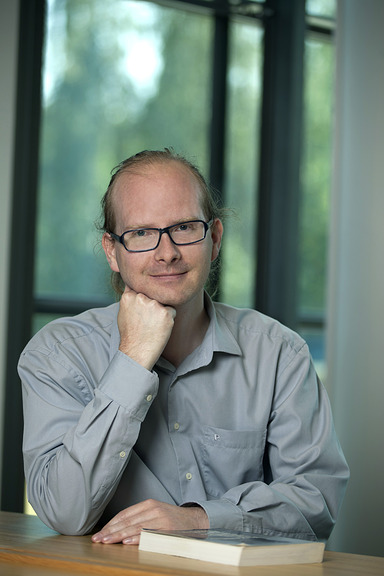
Leena Korkiala Tanttu
Esiteltävät diplomityöt
Author: Daffa Reza Kaiyandra
Supervisor: Mikael Rinne
Advisor(s): Masoud Torkan, Mateusz Janiszewski
Funding: -
Abstract:
This thesis tests whether AI-based methods applied to 3D point clouds can reliably support rock mass classification. A 3D point clouds of a 2.6 m × 4.6 m drift wall that was produced using photogrammetry was processed in CloudCompare and Python.
Point normals were clustered using unsupervised clustering method in Python. KMeans and Mean-Shift is implemented on the unit normal vectors to identify joint sets and their mean orientations. Within each set, DBSCAN was applied to group spatially continuous patches, and RANSAC was used to extract representative planes for spacing analysis.
Small planar facets, generated with the FACETS plugin in CloudCompare, were used to estimate surface roughness via JRC₂₀. Joint spacing and volumetric joint count were obtained from the RANSAC planes and a custom tool in Python that measures perpendicular distances between planes along the mean set normal.
These results were compared with traditional scanline and compass measurements collected on the same wall. The semi-automatic workflow reproduced the three main joint sets within a few degrees of the manual orientations, gave RQD values close to the measured 77.5%, and produced Jr values in line with field roughness profiles. When used as inputs to Q, RMR, GSI and RMi, the parameters that are obtained from point clouds led to rock mass classifications in the same “good rock” range as the manual assessment.
Overall, the work shows that AI-based methods can provide as consistent input data for rock mass classification, serving as a valuable complement to conventional field mapping.
Keywords: photogrammetry, 3D point clouds, URLA, artificial intelligence, machine learning, clustering, rock mass characteristics, rock mass classifications
Author: Manish Jaiswal
Supervisor: Prof. Jouni Punkki
Advisor(s): Senior Advisor Leena Korkiala-Tanttu , DSc. Anoosheh Iravanian
Collaborative partner City of Helsinki
Abstract:
This thesis investigates the use of recycled materials, such as incineration slag and fly ash, in rammed earth construction as a sustainable alternative. The study focuses on evaluating the strength, durability, and moisture resistance of stabilized rammed earth mixes, with incineration slag as the aggregate and fly ash as the binder.
Various binder-to-aggregate ratios, moisture content, and aggregate mixes were tested. Key tests included uniaxial compressive strength (UCS), freeze-thaw resistance, ultrasonic pulse velocity (UPV), and calorimetry. The best performance was observed in a mix with a 1:4 binder-to-aggregate ratio and 16 % water, using incineration slag, crushed concrete, and Nilsiä sand, achieving a UCS of 11.1 MPa after 28 days. In comparison, mixes with only incineration slag reached 5.21 MPa. After 15 freeze-thaw cycles, the UCS of the 1:4 incineration slag only mixes increased by 41 % to 7.33 MPa, while the 1:5 mix increased by 33 % to 5.96 MPa. Hydrophobization reduced capillary water uptake by about 96 %.
Calorimetry tests indicated that higher binder content and adequate water significantly improved hydration. The 1:4 mix with 20 % water released about 220 J/g binder after 72 hours, while the same mix with 17 % water released 190 J/g binder, indicating more complete hydration and better pozzolanic activation of the fly ash. Further research is needed to assess the long-term performance of hydrophobization treatments and moisture control, as well as their application on a larger scale.
ձ쾱ä : Jussi Viemerö
Valvoja: Jussi Leveinen
Ohjaaja(t): Sami Rämänen
Rahoitus: ei
վٱä:
Rakennusalan keskeisinä haasteina nähdään suunnittelu ja erityisesti suunnittelunoh-jaus. Tutkimusten mukaan suunnitteluvaiheessa syntyy merkittävä määrä hukkaa, mikä konkretisoituu toteutusvaiheessa puutteellisina, ristiriitaisina ja toteutuskelvottomina suunnitelmina. Alalla käyttöön otetut suunnittelunohjauksen menetelmät ovat kuitenkin osoittaneet, että hyvin toteutettuna niillä voidaan merkittävästi parantaa rakennushank-keiden kokonaisonnistumista.
Diplomityön tavoitteena oli selvittää, miten suunnittelunohjauksen LPS-palaveria voi-daan tehostaa. LPS-palaverin tehokkuutta voidaan mitata tehtävien toteutumisprosentti-luvulla, eli TTP-luvulla. Tutkimustyössä selvitettiin kohdeyrityksen LPS-palaverien nyky-tila laskemalla päättyneiden ja käynnissä olevien hankkeiden TTP-luvut sekä tarkasteltiin LPS-palavereissa esiintyvää hukkaa ja sen aiheuttajia.
Tutkimustyö toteutettiin monimenetelmätutkimuksena, jossa yhdistyi määrällinen sekä laadullinen tutkimusmenetelmä. Yhdistetyn menetelmän käyttö mahdollisti tutkittavan ilmiön tarkastelun niin objektiivisesti mitattavien lukujen kuin subjektiivisten havainto-jen ja kokemusten kautta. Määrällinen osuus koostui 12 tutkimuskohteen LPS-palaverien kirjatuista suunnittelutehtävistä. Laadullinen osuus koostui puolestaan viiden tutkimus-kohteen LPS-palaverien havainnoinneista ja viidestä teemahaastattelusta.
Määrällisen tutkimustuloksen perusteella TTP-lukujen ja toteutumattomien tehtävien kategorioiden välillä ei havaittu selkeitä tai johdonmukaisia yhteyksiä. Havaitut korre-laatiot olivat heikkoja ja osittain satunnaisia. Tulos antoi viitteitä siitä, että TTP-lukujen vaihtelu selittyi todennäköisemmin useiden tekijöiden yhteisvaikutuksella kuin yksittäi-sellä toteutumattomien tehtävien kategorialla.
Tutkimuksen laadullisessa osuudessa tunnistettiin 17 LPS-palaverin hukkamuotoa ja 25 hukan aiheuttajaa. Merkittävimmät liittyivät LPS-toimintamallin vakioinnin puuttumi-seen, tehtävälappujen tulkinnanvaraisuuteen, palaveriajan riittämättömyyteen, suunnit-telutehtävien pilkkomiseen sekä tehtävien luotettavan lupauksen ja riippuvuuksien tun-nistamisen haasteisiin. Tutkimuksessa esitettiin toimintatapoja, joilla hukkatekijöitä voi-daan vähentää tai poistaa ja siten tehostaa LPS-prosessia. Tutkimustyön tuloksena syntyi lisäksi kohdeyrityksen käyttöön jäänyt Excel-taulukko, johon koottiin kaikkien 12 tutki-muskohteiden suunnittelutehtävät.
ձ쾱ä: Matti Hopia
Valvoja: Mikael Rinne
Ohjaaja: Vesa-Matti Matikainen
Rahoitus:
վٱä:
Tässä diplomityössä tutkittiin, mitä tietoja kallioperästä tarvitaan ja millä keinoilla kyseiset tiedot voidaan saada, jotta porapaalun geotekninen kestävyys eli paalun alaisen kallion kantavuus voidaan arvioida kätevimmin ja riittävän luotettavasti. Lisäksi haluttiin selvittää, millaiset tekijät voivat lisätä porapaalun painumisriskiä kuormitustilanteessa. Työssä keinoina hankkia tietoja kallioperästä tarkasteltiin porapaalujen dynaamisia koekuormituksia, porapaalujen poraushavaintoja sekä eri kallioperätutkimusmenetelmiä. Tarkastellut kallioperätutkimusmenetelmät olivat porakonekairaus, MWD-kairaus, kallioreikäkuvaus ja kallionäytekairaus. Näitä menetelmiä vertailtiin keskenään eri kohteista saadun aineiston perusteella. Lisäksi työssä tehtiin kirjallisuuskatsaus ja paaluporarin haastattelu havaintojen tueksi. Työn tuloksena saatiin selville, että varsin heikko kalliolaatu (Q’=0…1) paalun kärjen tasolla lisää paalun painumisriskiä. Tästä syystä on tärkeää varmistua siitä, että kalliomassa on riittävän ehjää paalun kärjen tasolla ja riittävällä syvyydellä siitä alaspäin. Luotettavin tapa varmistaa paalun geotekninen kestävyys on dynaaminen koekuormitus, mutta kätevintä keinoa on vaikea työn perusteella nimetä. Tarkastellut menetelmät tukevat toisiaan, minkä vuoksi laadunvarmistuksen tulisi jatkossakin perustua yhdistelmään eri menetelmiä, joiden hyödyntämistä voidaan arvioida kohdekohtaisesti.
Author: Hang Liu
Supervisor: Prof. Mikael Rinne
Advisor(s)/Co-supervisor(s):Dr Mateusz Janiszewski and Tuomo Hänninen
Funding: No
Abstract:
The thesis investigated the development and evaluation of a virtual blasting training (VBT) system for underground tunnels. VBT is based on 360-degree photos of a tunnel blasting simulator in the Underground Research Laboratory of Aalto University (URLA) and blasting course materials. The goal was to improve blasting knowledge and skills in a safe, digital environment. The system adopts a dual platform architecture mode and utilises ThingLink and 3DVista Virtual Tour Pro software to develop six blasting scenarios. ThingLink was used for safety induction, while 3DVista Virtual Tour Pro was used for more complex blasting program training. For example, blasthole type and placement, charging and fuse connection, blast initiation, etc. The system was evaluated through feedback and questionnaires from a blasting expert and 10 users. The results showed an improvement in safety awareness and blasting knowledge. Thus, VR technology provides a new possibility for underground tunnel blasting training and is expected to be applied in future practical training.
Author: Puja Rajthala
Supervisor: Associate Professor Wojciech Sołowski
Advisor(s): Msc. (Tech) Jani Lepistö, Msc. (Tech) Erkki Liimatainen
Funding: Insinööritoimisto Lepistö Oy
Abstract
Settlement estimation in layered fine-grained soil is vital for choosing an appropriate foundation type for the infrastructure structures, including buildings and highways. This thesis focused on predicting the time-dependent primary consolidation behaviour of layered fine-grained soil in the Kujala area, where settlement data have been monitored over the past two years. To acquire this, Janbu parameters- including the modulus number (m), stress exponent (β), and preconsolidation stress (σp) were determined by curve-fitting the stress-strain curve obtained from oedometer laboratory tests conducted on undisturbed soil samples from the Kujala Interchange area. Initially, the coefficient of consolidation (Cv) for each soil layer was acquired using Taylor’s curve-fitting technique for the average degree of consolidation (U) versus time factor (Tv). Furthermore, to account for uncertainties resulting from inherent variability and sampling processes, characteristic values of Janbu parameters were evaluated for each soil layer, and the value of Cv was altered until the monitored time-dependent primary consolidations were replicated.
The results indicated that the monitored time-dependent consolidation behaviour of the study area could be successfully replicated by varying the coefficient of consolidation (Cv) using the Tangent Modulus method. However, there is a significant deviation in Cv value derived from the laboratory test from that occurring in the field since the drainage boundary condition, anisotropic permeability, and stress history of soil might not be the same as in the field while conducting the laboratory test. Hence, Janbu’s settlement model might be adopted with caution and is reliable only if the monitored settlement data are available to support back calculations.