


Can creativity be measured, managed and thus grow a business? Researchers join forces with Finnish companies

Creativity is a major asset for organisations. The prestigious World Economic Forum, among others, has identified creativity as the most important work-life skill of the future. Creativity is the ability to steer thinking and action in unprecedented directions. The challenge is often a lack of knowledge about how to foster and manage creativity.
One of Aalto University's strategic priorities is radical creativity. Aalto develops the culture, practices and structures to create the best possible conditions for radical creativity. This is also supported by the new Creative Leap: Creativity as a competitive advantage in business - a co-research research project.
In the two-year (2024-2025) project, researchers from Aalto University School of Business and School of Arts, Design and Architecture will explore ways to measure and manage creativity and assess its business impact. The project focuses on creative activities, especially in an organisational context, without forgetting individuals. The aim is to generate significant added value and competitive advantage for Finnish companies.
Tuomas Auvinen, Project DirectorWe know that creativity is a future work-life skill and a competitive advantage for companies. We are examining the evidence on the link between business creative competence and economic success.
High novelty value
Measuring creativity is inherently challenging, which is why there are few measures of creativity. There is much more to a creative idea or output than just the creative outcome. The contribution of creativity to value creation and its economic impact is challenging to assess, as creativity affects economic outcomes in many different ways. The different approaches (qualitative and quantitative) and indicators used in this research contribute to understanding the economic impact of creativity. No similar research has been done before.
'Creative Leap is an excellent example of a co-research project with a high novelty value, aiming at a disruptive, strategic knowledge development. At the same time, it builds on the initiative of Creative Business Finland to merge creative expertise into established industries', says Business Finland's Head of Creative Business Kenneth Nyholm.
Research joining forces with businesses
The companies and organisations involved in the Creative Leap project come from a wide range of sectors. They include e.g. Fiskars Group, Kemira, Marimekko, Posti, Raisio and Sitra. All have identified creativity as a driving force for change in their own sector. There are many different ways in which companies can take advantage of collaboration: for example, by looking at existing production processes, developing ways to innovate or focusing on developing creative skills. The project wants to encourage organisations to exchange knowledge and good practice.

'When we talk about increasing creativity in R&D, we mean strengthening innovation and developing new ideas that will help us stay competitive in the market. We joined the Creative Leap project because we want to actively invest in developing the competence of our personnel and at the same time learn how to make better use of creativity in industrial research and product development', says Nina Nurmi from Kemira.
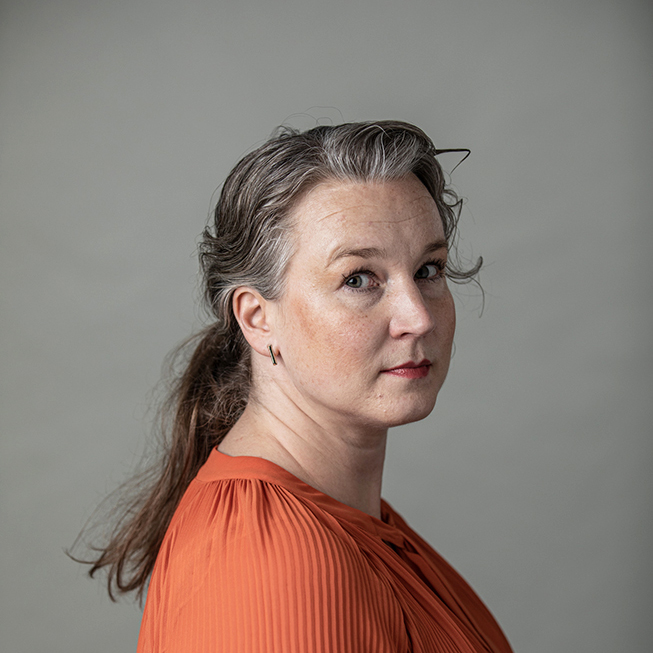
The Creative Leap research project is led by Tuomas Auvinen, Dean of the School of Arts, Design and Architecture. The work packages are led by Astrid Huopalainen, Assistant Professor of Leadership for Creativity and Matti Rossi, Professor of Information Systems at the School of Business. The co-research project is funded by Business Finland and NextGenerationEU.


Read more news

How to attract employees back to the office
Return-to-office policies are popular among employers, but securing employee cooperation hinges on offering them a fair exchange in return for accepting less autonomy.
Assistance dogs interpret needs of the person they assist non-verbally
A recent study shows that assistance dogs not only help people with practical tasks, but also actively contribute to their care
Professor Johannes M. Arend from Acoustics Lab receives Lothar-Cremer Award
Professor Johannes M. Arend was honoured for his innovative and groundbreaking work in the fields of binaural technology and virtual acoustics