


Department of Applied Physics
The Department of Applied Physics pursues vigorous research in physical sciences and creates important industrial applications.

Batteries work unseen nearly everywhere—powering everything from your car and smartphone to global trade and industry. For physicists, chemists, and engineers, the race is on to achieve the best energy efficiency at the least environmental cost.
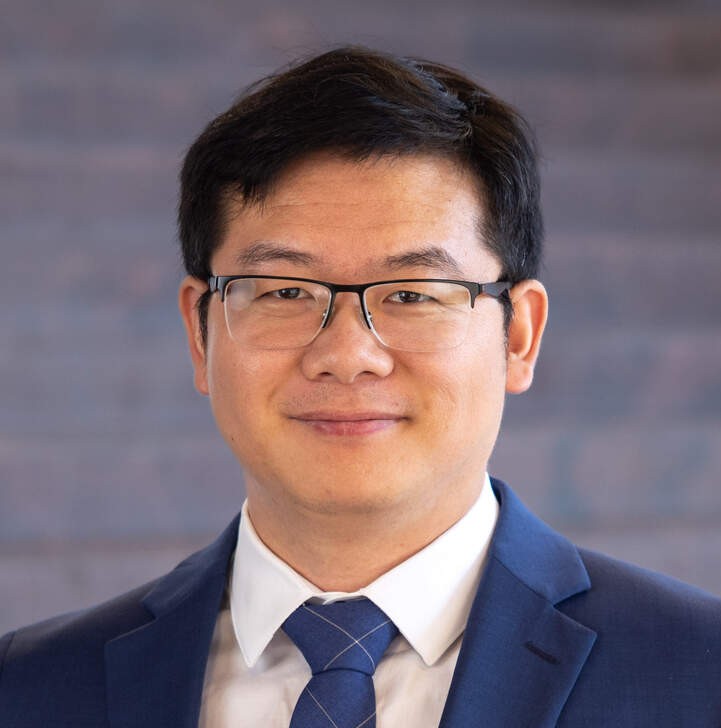
Physics Professor Yaolin Xu has researched batteries since his master’s thesis in 2012. His work, which focuses on understanding battery materials like lithium better, combines material science with energy research, physics with chemistry.
Xu, who recently started as an Assistant Professor at Aalto’s Department of Applied Physics, relishes the breadth afforded by that combination.
‘I focus on the fundamental physical chemistry of battery materials and try to understand how the material behaves during electrochemical processes. This is why I never focus on just one specific type of battery,’ Xu says.
His approach to material science, which usually involves creating new materials out of disparate components in a process called synthetization, also differs slightly.
‘I am a materials scientist, but I do not synthesize materials. Instead, I try to understand materials better.’
As a fresh professor, Xu fits in perfectly at the Department of Applied Physics where his Energy Materials and Interfaces research group overlaps between two specialties of the department: advanced energy solutions and materials physics.
Xu got his start doing a physics bachelor’s in China. Encouraged by his father, he then looked internationally for a place to do his master’s. He landed first in the Netherlands and then in Germany.
‘I did my master’s and PhD in the Netherlands. My PhD was sponsored by the Advanced Energy Materials Lab, which is a big initiative. During that time I also forged connections to industry partners. In Germany I went to the Helmholtz Association as a postdoc.’
Xu worked on a number of joint projects, including one which took him to MIT in the United States for a year. After returning to Germany in 2022, he began to look for a faculty position.
‘I like the research kind of life. Basically, I spend most of my time at work, and I wasn’t interested in going over to the industry side. So, I looked for openings, and Aalto seemed very appealing.’
Aalto matched perfectly with what Xu as a young, industrious, and innovative researcher was primarily looking for.
‘At Aalto I am fully independent, which is the main thing for me. I was also drawn by the great research infrastructure at the Nanomicroscopy Center.’
At Helmholtz, Xu had already been instrumental in building up existing laboratory facilities and introducing new research tools. He plans to do the same here. He is now hiring staff and further equipping his laboratory.
‘I have to build most things from scratch, which takes time. For the next couple of years the plan is to have my laboratory and my initial team fully built. I'm also applying for a lot of fundings so that I could get new members to work on different projects.’
But a university professor’s role is a bit different from working at a research center.
‘I had limited experience with teaching previously; it is quite new to me. I'm eager to know more and to really to have more interaction with the students and staff. It would be great if I could inspire Aalto students to come work on our battery topics.’

The Department of Applied Physics pursues vigorous research in physical sciences and creates important industrial applications.

OtaNano is Finland's national research infrastructure for micro-, nano-, and quantum technologies


