


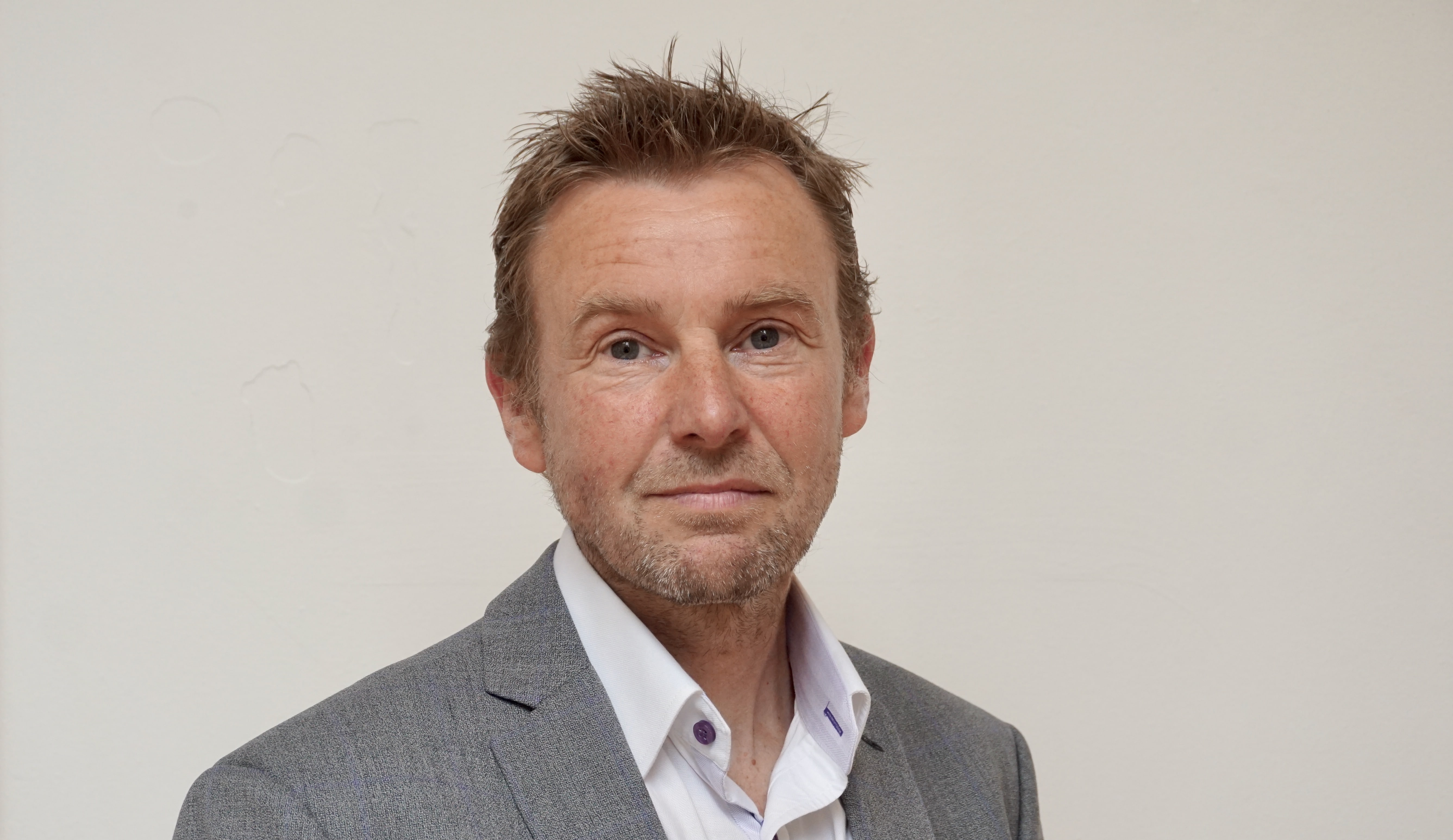
Professor Dominic Stead focuses on cities that encourage us to use more sustainable modes of transport

Dominic Stead, PhD, was appointed full professor of transport and land use planning at the Department of Built Environment in Aalto University as of 1 January 2021. He is one of the leading academic researchers in this field with a multidisciplinary approach, an extensive research record and an outstanding publication record.
Stead’s research and teaching focus on policy-making processes and sustainability related to urban transport and spatial planning. He has a strong multidisciplinary background with a doctorate in planning studies, a master's degree in environmental science and a second master's degree in town and country planning. Before starting at Aalto University, he was Associate Professor at Delft University of Technology, as well as researcher and guest professor in several leading universities in Europe and Australia.
His research addresses pan-European topics of transport, urbanization, energy, and urban and regional governance. He has successfully co-developed and managed more than 15 large international collaborative research projects supported by a number of funding agencies including ESPON EGTC, the European Commission and the United Nations.
Stead has also been a research evaluator for many funding agencies, including the European Commission, the COST Association, the Academy of Finland, the Swedish Research Council for Sustainable Development, NordForsk, the Research Council of Norway, and the Latvian State Education Development Agency. He has also been a member of several scientific advisory committees for conferences.
Dominic Stead has published extensively in refereed journals and his work is highly cited. It has also had an impact on policy-making. He is associate editor of Planning Practice and Research, and an editorial board member of five international peer-reviewed journals.
Stead has more than 25 years of teaching experience. As a teacher he aims to promote critical thinking and analysis, innovation, problem solving and student interaction.
Four questions for Professor Stead
What made you interested in planning?
A concern about the environment and a desire to make cities more attractive for living, working and visiting.
How would you plan and design cities with sustainable modes of transport?
More space and priority for pedestrians and cyclists in cities. However, it’s not just about priorities and space; it’s about making walking and cycling attractive and enjoyable. This requires close attention to the design of the built environment to make appealing and safe places with a range of local services and facilities.
What is your favourite way to move around in a city?
Walking and cycling, and sometimes running.
Three things you would like to change in Helsinki metropolitan area?
Don’t know yet!
Read more news

Open Call: Unite! Visiting Professorship Program at TU Darmstadt Germany
Aalto researchers, lecturers and professors are invited to apply for a visiting professorship at TU Darmstadt, offering a unique opportunity to teach, collaborate internationally, and contribute to innovative education.
New professors appointed to the School of Arts, Design and Architecture
A summary of all new professors appointed since September 2024.
Ilkka Lakaniemi, Director of CKIR, has been appointed to the board of the Fulbright Finland Foundation
Fulbright programmes and scholarships are highly appreciated in the United States