ÄûÃʵ¼º½

News

Professor Michael Hummel awarded a Proof of Concept grant from the European Research Council

The ERC grant facilitates the commercialisation of developments that evolved from ERC-funded research projects.
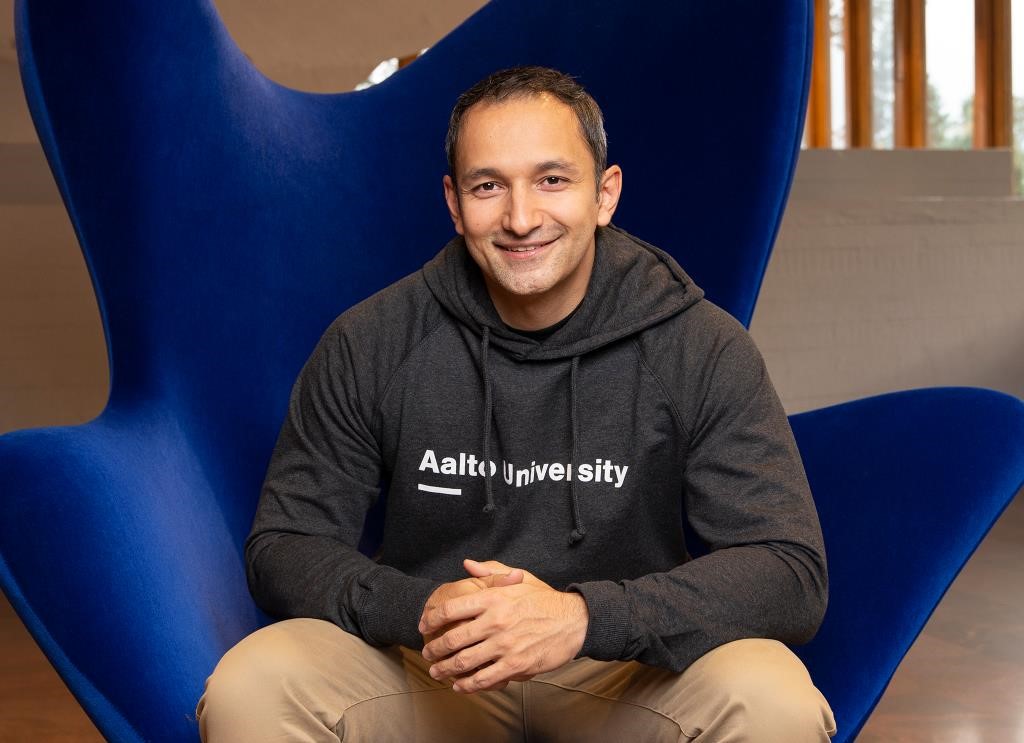
Professor Michael Hummel
Professor Michael Hummel. Photo:Aalto University / Jaakko Kahilaniemi)

Professor Michael Hummel has received 150 000€ to develop his bio-based carbon fibre Proof of Concept (PoC) ready for commercialisation. Every year the ERC awards grants to help in assisting with such things as developing viability and direction, clarifying intellectual property, market studies and additional research. Hummel received the ERC Starting Grant for his project -Unlocking the Entire Wood Matrix for the Next Generation of Carbon Fibers (WoCaFi)-in 2016. 

Professor Hummel’s project aims at creating and scaling bio-based carbon fibres that can be used in composite materials as modern, lightweight and cost worthy solution for replacing metal components in the automotive industry. ‘The carbon fibre reinforced composite (CFRC) elements provide significant weight reduction while maintaining the necessary strength and safety properties needed for cars’, Professor Hummel says.

The ERC evaluates each PoC proposal based on the following points:

  • Excellence in Innovation potential: Proposals will have to demonstrate that the proposed Proof of Concept activity could greatly help move the output of research towards the initial steps of pre-commercialisation or social innovation.
  • Impact: The submitted Proof of Concept proposal is expected to generate effects or benefits to the economy, society, culture, public policy or services.
  • Quality and efficiency of the implementation (Quality of the Proof of Concept plan):  The proposed Proof of Concept proposal is based on a sound approach for establishing technical and commercial feasibility of the project.

       ()

Read more

The ERC is funding ground-breaking, cutting edge research. What is needed for opening up new paths?

‘Cooperations that allow for a multi-disciplinary approach are very central. In addition to experts in wood chemistry and forest products technology, we have various specialists in engineering and other sciences’, says Michael Hummel.

Seven-figure grant for researcher producing carbon fibre from wood

Michael Hummel, the recipient of the much sought-after ERC Starting Grant, knows that there is a great need for more affordable carbon fibre.

News
Michael Hummel, kuva: Jaakko Kahilaniemi

Michael Hummel: Sustainable and renewable materials will replace oil-based products

Researchers need to be team players, says Professor of Biopolymer Chemistry and Engineering.

News
Michael smiling in Dipoli building

Get to know us: Associate Professor Michael Hummel

Michael Hummel had plans to stay in Finland for only a year or so. In the end, he enjoyed his work at Aalto so much that he decided to stay.

News
  • Updated:
  • Published:
Share
URL copied!

Read more news

Three people talk at a round table; woman holds a cup, phone nearby, tech wall behind
Research & Art Published:

How to attract employees back to the office

Return-to-office policies are popular among employers, but securing employee cooperation hinges on offering them a fair exchange in return for accepting less autonomy.
A dog and two researchers. Photo: Aalto University/Mikko Raskinen
Research & Art Published:

Assistance dogs interpret needs of the person they assist non-verbally

A recent study shows that assistance dogs not only help people with practical tasks, but also actively contribute to their care
From left: Prof. Stefan Weinzierl (TU Berlin), Prof. Johannes M. Arend (Aalto University), and Prof. Christoph Pörschmann (TH Köln) after the Lothar-Cremer Award ceremony at DAGA 2026 in Dresden, Germany.
Awards and Recognition, Research & Art Published:

Professor Johannes M. Arend from Acoustics Lab receives Lothar-Cremer Award

Professor Johannes M. Arend was honoured for his innovative and groundbreaking work in the fields of binaural technology and virtual acoustics
Abstract close-up of glossy amber-brown liquid strands swirling and dripping on a black background
Cooperation, Research & Art Published:

The EU Horizon-funded VOPUS project explores the future of virtual culture

The EU-funded VOPUS project uses the virtual Operaland platform to investigate the long-term impacts on culture when citizens spend more time in virtual worlds.