


Professor Wojciech Sołowski discusses challenges of storing nuclear waste
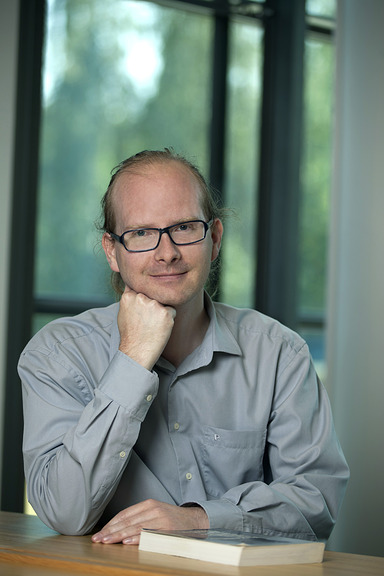
Wojciech Sołowski
Wojciech Sołowski joined Aalto University in 2014, when he was first appointed to the tenure track as an assistant professor of geotechnical engineering. In September 2020, he received tenure and a promotion to associate professor. Before Aalto University, he worked as a postdoctoral researcher at the University of Newcastle, Australia.
Sołowski’s field of research includes the numerical modelling of soils – including the development of the material point method and other numerical methods used to perform complex simulations – as well as the mechanics of unsaturated soils. He is also interested in the modelling of barriers used in underground nuclear waste storage.
Sołowski completed his master's degree at the Silesian University of Technology in Gliwice, Poland in 2002 before starting his doctoral studies in geotechnical engineering at Durham University in the UK. He received his doctorate in 2008 with the completion of his doctoral dissertation Unsaturated Soils: constitutive modelling and explicit stress integration.
Tenured Professors' Installation Talks
In the short videos, the new tenured professors present their own field and research.

Read more news

Tired of swiping? Now an AI simulation helps us understand why
Screen logging tells us where smart phone users tap and swipe, but now researchers have developed a musculoskeletal model that helps understand the physical effort that goes into these motions
New professors appointed to the School of Arts, Design and Architecture
A summary of all new professors appointed since September 2024.
The Educational Partnership project is moving forward in Espoo – cooperation between guardians and schools is being developed through participatory methods
The two-year project explores and develops cooperation between guardians and schools using service design methods.